Tampa birdwatching does not require an expensive camera or the ability to identify every bird you see. A rewarding first outing can begin with one accessible park, a short route, and time to watch how birds move through their surroundings.
The most useful preparation is choosing a place that suits your interests and checking what is available there now. Habitat, viewing access, weather, and your walking comfort will shape the visit more than a long list of species you hope to find.
Choose a habitat before choosing a bird
Start by deciding what kind of setting you would enjoy exploring. A wooded trail, freshwater wetland, and open shoreline offer different viewing experiences.
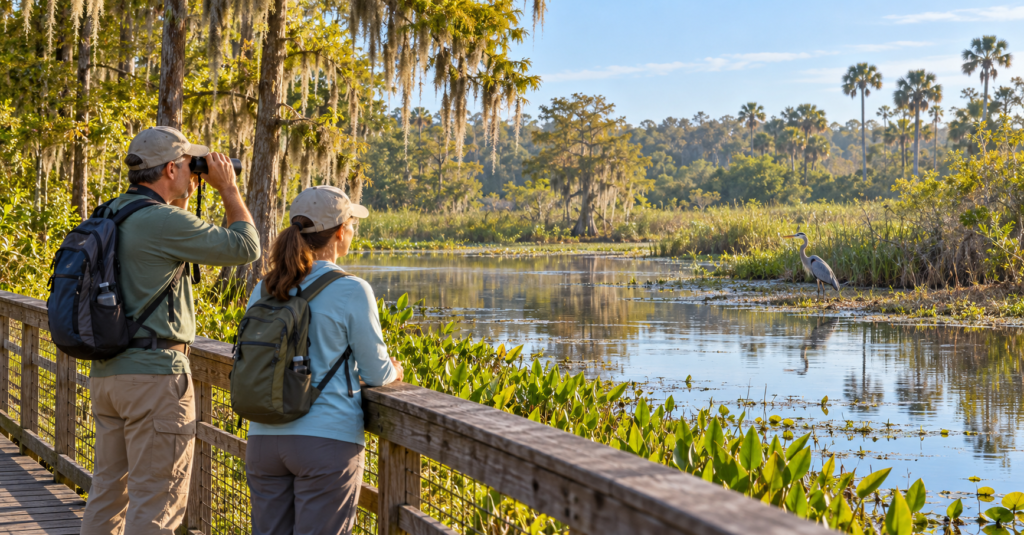
Around water, birds may be easier to notice as they stand, swim, or feed in the open. In dense vegetation, you may hear birds before seeing them and spend more time scanning branches. Neither experience is better; they simply demand different amounts of patience and visual searching.
Hillsborough County’s birdwatching guide identifies local destinations to research. Use it to select one place rather than trying to visit several habitats on your first morning.
Check access to the viewing area you want
A park being open does not mean every boardwalk, tower, or trail is available. Read the current announcements on the official location page before travelling.
Lettuce Lake Park, for example, has posted notices about boardwalk repairs and an observation-tower closure. Those notices matter if you are choosing the park specifically for elevated or waterside viewing. Check its official park information for the latest status.
Identify a suitable route that is confirmed open. If a preferred feature is unavailable, decide whether the remaining paths still meet your needs. Avoid relying on an older visitor photograph or review to establish present access.
Make the first route deliberately short
Choose a route that leaves room to stop frequently. Birdwatching involves pauses, so a distance that seems brief on a walking map can occupy much of a morning.
Check the surface, shade, resting places, toilets, and distance from parking. If you need an accessible route, ask the park about the particular path and any current obstructions rather than relying on a general accessibility label.
Download the map before leaving. Hillsborough County’s hiking guidance recommends carrying a map even where trails have markers. Keep track of your position while watching birds so an interesting sighting does not distract you from the route.
Plan a visit around usable conditions
Check opening hours and allow enough time to leave comfortably before the park closes. Do not assume that an early birdwatching start is possible at a location with a later gate-opening time.
Review the weather, including heat, rain, and thunderstorms. Choose a visit length that suits the conditions and everyone attending. A shorter outing with comfortable pauses is more useful than staying until you are tired or overheated.
Consider the direction of the light when you reach a viewing point. Looking toward bright reflections can make identification difficult. Where the route allows, try another position without leaving designated paths or approaching the birds.
Bring equipment you can use comfortably
Binoculars are helpful, but familiarity matters more than specifications on your first visit. Practise focusing on a stationary object before trying to follow a moving bird.
If you already own binoculars, use them before deciding whether to buy something different. Without them, concentrate on larger birds or those visible from established observation points. You can still learn a great deal about movement, feeding, and habitat.
Bring water, weather-appropriate clothing, sun protection, and any insect protection you normally use. Carry only the camera equipment you are comfortable managing while walking. Keep your hands available for balance on uneven or wet surfaces.
Observe first and identify second
When you notice a bird, take a moment to watch it before reaching for a phone. Record its approximate size, shape, color pattern, and behavior.
Ask simple questions. Was it walking along the water’s edge or climbing a trunk? Did it have a long neck, a short tail, or a distinctly curved bill? Was it alone or among similar birds?
These details are often more useful than remembering one color. Make a short note or take a photograph from your existing position if practical. You can investigate the identification afterward without losing the chance to observe the bird itself.
Use sound as a prompt to look carefully
Pause occasionally and listen. Calls, rustling, and movement can reveal activity that a steady walking pace would miss.
Try to locate the general direction of a sound, then scan gradually. Avoid expecting every sound to lead to a visible bird. Dense foliage may keep the source concealed throughout your visit.
An identification app can suggest possibilities, but treat its results as clues to compare with your observations. You do not need a confirmed name for every encounter to have a successful outing.
Keep observation comfortable for wildlife
Stay on designated paths and use established viewing spaces. Give birds room to feed, rest, and move without responding to your presence.
If a bird repeatedly watches you, moves away as you approach, or stops its previous activity, increase the distance. Do not follow it simply to improve a photograph. Avoid feeding birds, disturbing nests, or using recorded calls to draw them closer.
Respect other visitors too. Keep conversation quiet around people observing wildlife, share narrow viewing areas, and avoid blocking the route with equipment. Check local pet rules before bringing a dog.
Consider a guided outing if you want help
A ranger-led walk can help you understand what to look for and how to interpret the habitat. Check the current event listing for its focus, registration requirements, route length, and age restrictions.
A general nature walk may include plants and local history alongside bird observations. That can be useful for beginners because it connects sightings with the surroundings birds use.
Confirm the meeting point and cancellation procedure before attending. Do not assume a past event listing represents a recurring walk.
Keep a small record of the visit
Afterward, note the location, route, weather, and a few memorable observations. Include uncertain identifications as questions rather than turning them into definite sightings.
Record practical details too: where you parked, which sections offered good visibility, and whether the route felt comfortable. These notes make the next visit easier to plan.
Tampa birdwatching becomes more rewarding as familiar places reveal different activity. Returning to one manageable location can teach you more than rushing through a new park every time. Begin with a comfortable outing and let your interests develop from what you actually observe.
Note: Park access, facilities, and guided activities can change. Check current notices and visitor rules with the managing authority before travelling, and keep a respectful distance from wildlife.