Jacksonville water leak adjustments can help eligible customers address unusually high charges, but a repaired pipe does not automatically produce a bill credit. The utility needs enough information to evaluate what happened, which billing periods were affected, and whether the request meets its requirements.
For households served by JEA, the useful work begins with a clear record of the leak and repair. Save the relevant bills, explain the source of the water loss, and obtain repair documents that describe more than a general plumbing visit.
Confirm who bills you for the water
Check the provider and account details on the affected bill before looking for an adjustment form. A Jacksonville address alone does not establish that JEA bills the household directly.
If water charges arrive through a landlord, condominium association, or property manager, ask how the building receives and allocates them. You may need the account holder to contact the utility, while your own question concerns a separate charge on the rent statement.
Identify the correct service address and meter where more than one account is involved. Keep water, wastewater, and irrigation charges distinct so your request addresses the right service.
Separate unusually high use from a confirmed leak
A higher bill is a reason to investigate, but it does not identify the cause. Compare the consumption figures, billing dates, and number of days in the billing period with previous statements.
Think about changes such as irrigation use, visitors, or other unusually heavy consumption. Record those facts honestly rather than assuming every additional gallon came from the leak.
JEA’s water-spike guidance discusses checking for possible leaks, including observing meter movement when water use is stopped. If the source remains unclear, seek an appropriate assessment instead of guessing in the adjustment request.
Record the discovery and repair dates
Create a short timeline showing when you noticed the problem, when it was investigated, and when the repair was completed. Distinguish confirmed dates from estimates.
For example, you may know that a plumber repaired a buried pipe on a particular day without knowing when it began leaking. State that difference clearly. A discovery date should not automatically be presented as the start of the water loss.
Keep appointment messages, work orders, and photographs with the timeline. These records can help explain why consumption increased across more than one statement or why the repair occurred after the bill arrived.
Ask for a specific repair description
Review the plumber’s paperwork before filing it away. A receipt saying “service call” may provide little information about the leak itself.
Ask for an accurate description of the location, defective component, work performed, and completion date. The service address should also be identifiable. If the invoice does not explain the repair, request a supporting statement rather than changing the contractor’s wording yourself.
JEA’s residential adjustment information says a plumber’s statement or receipt is required to verify completed repairs for certain leaks where water did not enter the sewer system, including underground leaks, slab leaks, and broken pipes.
Explain where the leaked water went
Water and wastewater charges are separate parts of the review. Explain whether the leak released water into the ground, inside the building, or through a fixture connected to the sewer.
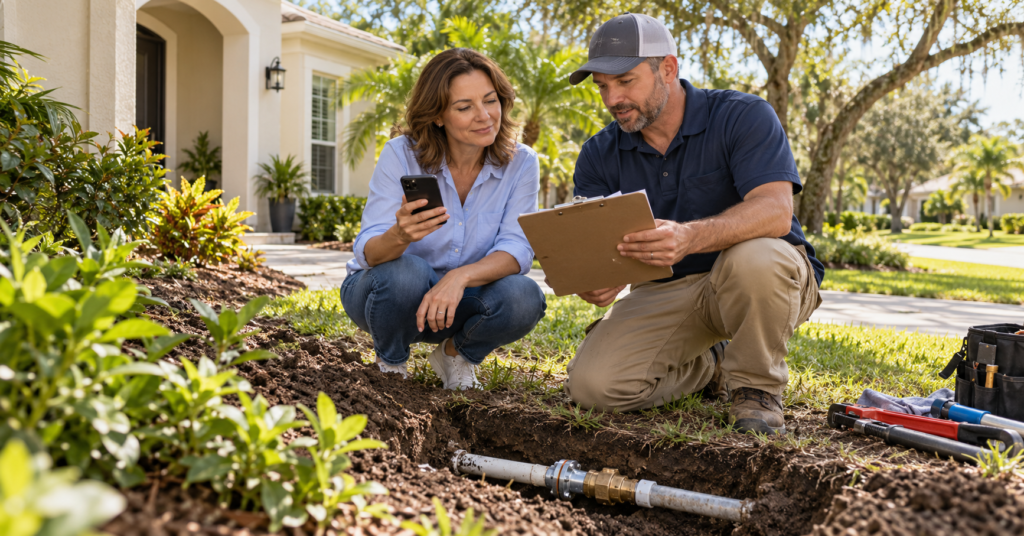
Ask the repair professional to document what they actually found. Avoid making a technical claim that the evidence does not support. A photograph of a wet yard, for instance, may help show conditions but may not establish the entire source or route of the water loss.
This distinction is especially useful when several problems occurred together. If a toilet and an outdoor pipe were repaired during the same visit, list them separately so the request does not describe all excess use as one underground leak.
Keep photographs useful and safe
Where practical, take photographs that show the location and visible problem before the work is covered. A wider image can establish context, while a closer image can show the damaged component.
Afterward, save images of the completed repair if they are available. Keep the original files and note what each image shows.
Photographs should support the written account rather than replace required repair documents. Do not delay urgent repairs or enter an unsafe area simply to collect evidence. Ask the contractor whether they can provide photographs taken during the work.
Match the repair to the affected bills
Save the statements covering the suspected leak period and the first statement after repair. Note the consumption shown on each one.
If your account provides usage information between bills, keep relevant records showing the change. Lower use after repair can help explain the sequence, although it does not by itself establish the amount of any adjustment.
Prepare a short factual summary: what was found, when it was repaired, and which statements you are asking JEA to review. Avoid calculating a promised credit from the total bill. Eligibility and the adjustment method must be determined under the utility’s applicable terms.
Check the current residential requirements
Use JEA’s residential adjustment requests page to locate the current process. JEA describes adjustments as something it may provide for leaks or excessive water use, rather than an automatic credit.
Ask about submission deadlines, eligible billing periods, previous adjustment history, and any additional evidence needed for your circumstances. Do not apply commercial or multifamily rules to an individually billed residential account.
If you repaired the problem yourself, ask which documents JEA accepts before assuming a parts receipt is sufficient. Explain the work accurately and follow the instructions given for that situation.
Keep the bill’s payment status separate
Do not assume that submitting an adjustment request changes the due date or suspends collection activity. Ask JEA how the account should be handled while the review is pending.
If you need a payment arrangement or extension, discuss that separately and keep confirmation of what was agreed. A request for billing review and an approved payment arrangement serve different purposes.
Save your submission confirmation and any reference number. If JEA requests more information, respond with the missing document and identify the existing request so the records remain connected.
Check the outcome on the account
Review the response and subsequent statements to see whether the request was approved and how any credit was applied. If the result is unclear, ask which charges and billing periods were considered.
If no adjustment is granted, request the reason and whether additional documentation could address the issue. Keep the repair records even after the billing question is settled; they remain useful maintenance information.
Jacksonville water leak adjustments are easier to discuss when the facts are organized. A clear timeline, specific repair evidence, and an explanation of where the water went give the utility a stronger basis for reviewing the request.
Note: This article provides general information. Adjustment eligibility, documentation requirements, and payment arrangements depend on the provider and account. Confirm JEA’s current residential terms before submitting a request or changing how you pay an outstanding bill.