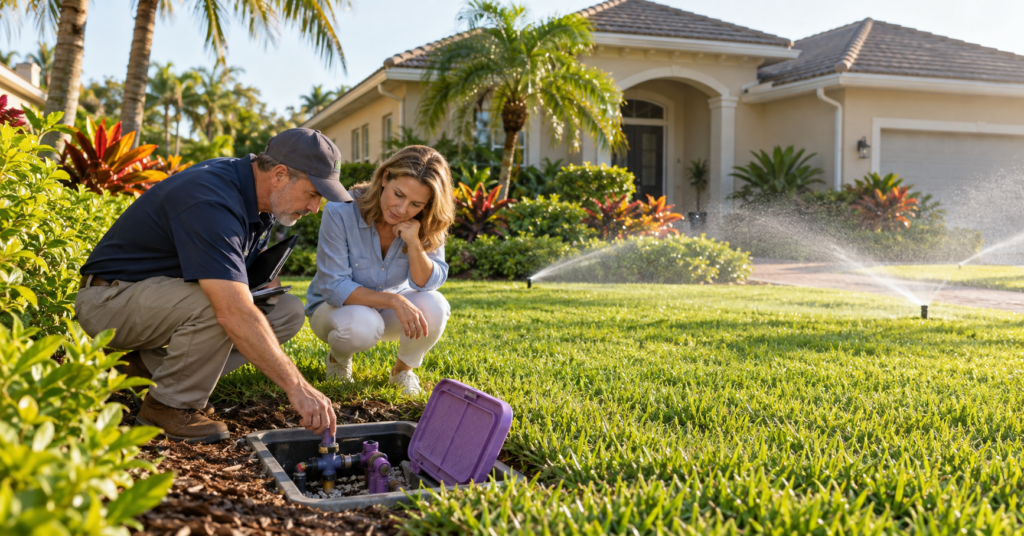
Florida homes with reclaimed water irrigation can appeal to buyers who want an established way to water their landscaping. Yet the phrase in a listing tells you little about the equipment at a particular address. The connection might be active and the sprinklers well maintained, or the home might need repairs before the system can be used.
Reclaimed water is treated wastewater supplied for approved uses, including landscape irrigation. It travels through a system separate from drinking water. Before buying, confirm the property’s service, inspect its equipment, and understand what the local utility expects of the homeowner.
Confirm that the home has an active connection
Ask the reclaimed water provider whether service is active at the property’s address. Find out whether a meter or service connection is installed and what the buyer must do to continue service after closing. Request a recent bill from the seller to see whether the account has been used.
Read listing language carefully. “Reclaimed water available” could mean that a line serves the neighborhood without confirming that the house is connected. Ask the provider what is installed at this address and whether any work remains before the sprinklers can use its water.
If the home is in an HOA, request a written explanation of how service is arranged. Determine whether the owner receives a separate bill or pays through association charges. Ask whether the association maintains any equipment on individual lots.
Identify what supplies the sprinklers
An irrigation controller can show when the sprinklers run, but it does not identify their water source. Ask the seller whether the system uses reclaimed water, a private well, a pond, or drinking water. Find out whether every zone uses the same source.
If the irrigation supply changed in the past, ask for the contractor’s records and an explanation of the old connection. A qualified irrigation professional can trace accessible lines and valves and identify questions that require the utility’s attention.
This matters especially when the property also has a private well. You need to know which source serves the house, which serves the yard, and whether proposed changes require approval. Our guide to Florida homes with well and septic systems covers other questions about those property features.
Check the separation from drinking water
Reclaimed water is not drinking water, and its piping must remain separate from potable plumbing. Florida’s Department of Environmental Protection explains the role of cross-connection controls and inspections in protecting drinking water systems.
Ask the provider whether it has inspection records for the address. Show your home inspector any outdoor valve, hose connection, or pipe whose purpose the seller cannot explain. If someone has altered the plumbing, have an appropriate professional assess the setup before you plan further work.
Purple markings help identify some reclaimed water components. They do not, by themselves, establish that all of the home’s connections are correct. The actual arrangement of the pipes and valves is the issue to verify.
Watch every irrigation zone operate
Arrange to run the system during the inspection period. Walk around the home as each sprinkler zone turns on. Look for heads that fail to rise, leaks at valves, weak pressure, uneven coverage, and spray hitting windows, sidewalks, or neighboring property.
Check for water pooling near the foundation or in low areas of the yard. Ask whether any zones have been shut off because they leak or no longer work. A controller may respond normally while parts of the outdoor system need repair.
If problems appear, request a written description and repair estimate. That information helps you judge the feature’s real value and address the work before closing.
Ask how you may use the water
Obtain the current customer instructions from the utility serving the home. Ask about approved uses, watering schedules, and requirements for changing the irrigation system. Rules can vary by provider, so guidance from another Florida city may not answer your question.
Think about how you intend to use the yard. A vegetable garden, fruit plants, pool, or outdoor play area may raise questions that ordinary lawn irrigation does not. Describe your plans to the utility and ask what its rules allow. Do not assume that water supplied for landscape irrigation is suitable for every outdoor task.
Also check whether the existing sprinkler layout fits the present landscaping. Heads placed for a former lawn design may miss new plants or spray a patio. Any adjustments will add to the work you take on as the new owner.
Calculate the cost beyond the water bill
Ask how the provider bills reclaimed water service at this address. Review the seller’s recent bills, while allowing for differences in watering habits. Find out whether there are fixed charges, usage charges, or other amounts connected to the service.
Then establish who pays for repairs. Ask where the utility’s responsibility ends and the homeowner’s begins. Identify who maintains the meter or service box, private irrigation lines, valves, controller, and sprinkler heads.
If an HOA is involved, compare its documents with the utility’s explanation. A charge that includes reclaimed water service may still leave the owner responsible for repairs in the yard. Resolve that distinction before estimating the home’s ongoing costs.
Keep the answers in your purchase file
Before the inspection period ends, collect confirmation of service, current utility instructions, recent bills, HOA information, and the irrigation inspection findings. If the seller agrees to complete repairs, record what work is promised and how its completion will be checked.
Florida homes with reclaimed water irrigation do not all offer the same experience. The useful feature is an active, properly maintained system with rules and costs you understand. Verify those details at the specific property before closing.
Note: This article provides general information. Reclaimed water rules, watering schedules, and maintenance responsibilities vary by utility. Confirm the requirements for the property’s address with its provider before using or modifying the system.