`1Florida springs swimming offers clear water, natural scenery and relief from summer heat. However, a spring is not the same as a swimming pool. Water can be colder and deeper than expected, currents may be present and submerged cave openings can create serious hazards.
Access rules also differ between parks. Swimming may be limited to marked areas, closed during manatee season or unavailable when water conditions change.
Check the official page for the specific spring before travelling and read every posted sign after arriving.
Spring Water Can Feel Surprisingly Cold
Many Florida springs maintain relatively stable temperatures throughout the year. Water at several popular springs stays near 68 to 72 degrees Fahrenheit, although the exact temperature varies by location.
That may sound comfortable compared with winter conditions, but sudden immersion can still feel cold when the air is hot. A swimmer may gasp, breathe rapidly or lose coordination after entering too quickly.
Enter gradually when possible and give your body time to adjust. Avoid jumping into unfamiliar water.
Children, older adults and people with heart, breathing or circulation conditions may be more sensitive to sudden temperature changes. Anyone with a relevant medical concern should seek personalised advice before swimming.
Do Not Confuse Clear Water With Shallow Water
Spring water can be exceptionally clear, making the bottom appear closer than it is.
Depth may change abruptly around the spring vent, limestone ledges and underwater channels. A person can step from a shallow shelf into water that is several feet deeper.
Ask park staff about depth and designated swimming boundaries. Keep children and weak swimmers in appropriate areas and provide active supervision.
An inflatable tube or pool toy is not a substitute for an approved, properly fitted life jacket.
Not Every Spring Allows Swimming
Florida has hundreds of springs, but recreational access varies. Some are located on private property, within protected areas or in places where swimming is prohibited.
Even a state park known for swimming may close the water temporarily because of:
- High or low water conditions
- Strong currents
- Wildlife activity
- Water-quality concerns
- Maintenance
- Storm damage
- Manatee protection
- Emergency conditions
Do not enter from an unofficial trail or roadside location when the designated entrance is closed. A closure applies to the resource, not only to the ticket gate.
The official Florida State Parks website provides current information for state-managed springs.
Parks Can Reach Capacity Early
Popular spring parks may fill during warm weekends, holidays and school breaks. Once the parking area or recreation zone reaches capacity, staff may temporarily stop admitting visitors.
Some parks frequently reach capacity before midday. Leaving the queue does not guarantee entry later, and admission procedures can change.
Check whether the park uses reservations, timed entry or first-come admission. Review current operating hours and capacity notices before leaving home.
Arriving early improves the possibility of entry but does not guarantee it. Have an alternative activity that does not involve entering through an unauthorised access point.
Swimming Areas May Close Before the Park
The park’s general operating hours do not necessarily match swimming hours.
A swimming area may close before sunset, during poor visibility or when staff determine that conditions are unsafe. Some locations allow hiking or picnicking after water access has ended.
For example, Florida State Parks states that the Wekiwa Springs swimming area closes before the park itself and does not permit jumping or diving.
Confirm the last permitted water-entry time when planning an afternoon visit.
Lifeguards May Not Be Present
Some Florida spring swimming areas do not have lifeguards. A marked boundary or observation platform does not mean that trained rescue personnel are watching the water.
Swim with another person and keep track of each other. Adults supervising children should remain close enough to respond immediately.
Do not depend on another visitor to notice distress. Drowning can occur quietly and may not involve shouting or visible splashing.
Know where emergency equipment, park staff and the nearest telephone are located. Mobile service may be weak in rural parks.
Currents Can Be Stronger Near the Vent
Springs discharge groundwater through openings in limestone. The outward flow can create a current in the swimming area or spring run.
Current strength can change with water levels and rainfall. A swimmer may move comfortably in one direction and then struggle to return.
Stay within designated boundaries and avoid the immediate vent area when rules or conditions require it. Do not challenge the current to test your strength.
Tubing areas can also have branches, shallow sections and changing flow. Follow instructions concerning launch points, exits and approved equipment.
Stay Away From Underwater Caves
Some springs connect to extensive underwater cave systems. A visible opening may appear inviting, especially in clear water, but entering it without specialised training and equipment can be fatal.
Open-water swimming or recreational scuba experience does not qualify someone for cave diving. Darkness, narrow passages, silt, overhead rock and complex navigation can prevent a diver from returning to the surface.
Do not swim into an underwater opening, pass warning signs or remove barriers. Never follow another diver into a cave.
Areas approved for ordinary swimming should still be treated cautiously because natural rock formations can create entrapment and head-injury risks.
Avoid Jumping and Diving
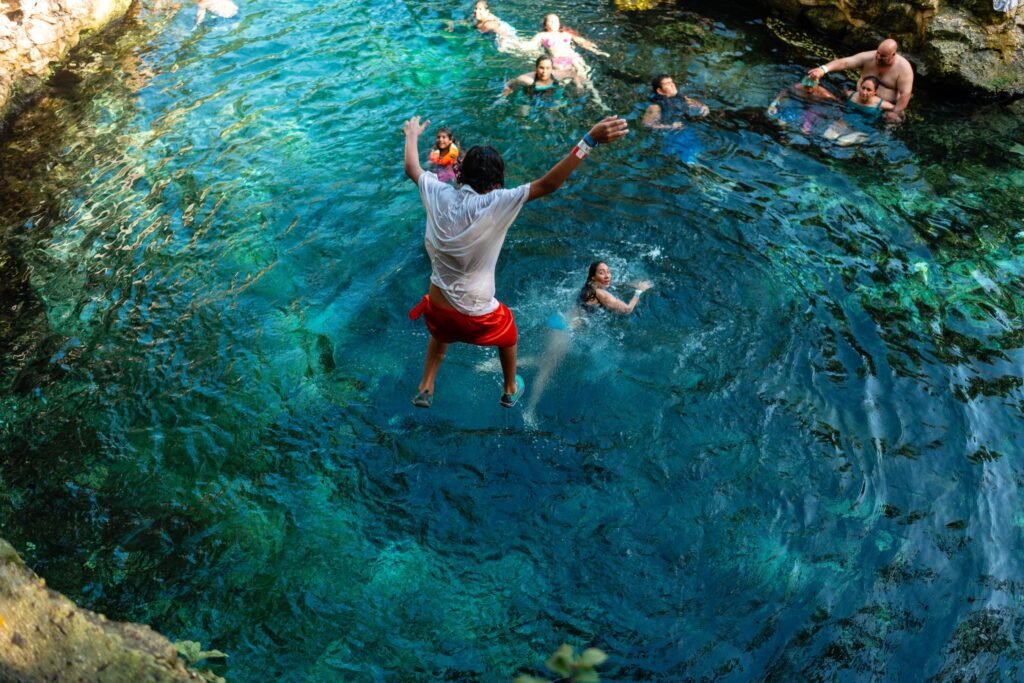
Spring depth can vary and submerged rocks may not be visible from above despite the clarity of the water.
Diving from banks, platforms, trees or unauthorised structures can cause head, neck and spinal injuries. It can also damage sensitive vegetation and erode the shoreline.
Follow posted rules even if other visitors are jumping. Their behaviour does not establish that the location is safe or permitted.
Use designated stairs, ramps or entry areas. Wet limestone and algae-covered surfaces can be slippery.
Manatees Need Space
Manatees use some Florida springs and warm-water refuges, particularly during colder months.
Swimming access may be restricted or closed to protect resting animals. In Florida state parks, swimming with manatees is not generally allowed.
If a manatee enters an area where you are swimming, do not approach, touch, chase or block it. Move calmly away and give it an unobstructed route.
The Florida Fish and Wildlife Conservation Commission advises visitors to observe manatees without touching or pursuing them. Feeding or giving water to a manatee is also prohibited.
A manatee approaching a person does not provide permission to interact.
Expect Other Wildlife
Florida spring environments can contain fish, turtles, snakes, alligators and other wildlife.
Most animals avoid people when given space. Do not feed them or attempt to pose with them for photographs.
Remain alert near vegetation, quiet shorelines and less-used sections of water. Keep children close and pets under control where pets are permitted.
If an alligator is present in or near the designated swimming area, leave the water calmly and notify park staff. Do not attempt to move, feed or frighten it.
Park staff may close an area when wildlife creates a current concern.
Protect the Spring Environment
Clear water does not mean the ecosystem is resistant to damage. Springs can be affected by erosion, rubbish, nutrient pollution and disturbance of aquatic vegetation.
Use designated paths and entry points. Avoid standing on submerged plants or climbing on sensitive limestone formations.
Do not release pets, fish, plants or bait into the water. Take rubbish with you and keep food away from wildlife.
Follow rules concerning sunscreen, flotation equipment, disposable containers and pets. Restrictions vary because parks manage different environmental and safety conditions.
Check Water Conditions Before Entering
A spring can become cloudy or discoloured after rain, flooding or changes in river levels. Some spring runs experience dark river water moving into normally clear areas.
Reduced visibility can hide rocks, drop-offs and underwater debris. High water can also strengthen currents or cover familiar landmarks.
Do not use photographs from a previous visit to judge current conditions. Ask staff whether recent weather has affected the swimming area.
If the water has an unusual colour, odour or visible algal growth, remain out until official guidance confirms that swimming is permitted.
Avoid Swimming With Open Wounds
Natural water can contain bacteria and other microorganisms.
Avoid entering with an open wound, recent surgical site or active skin infection unless a healthcare professional has advised that it is safe. Waterproof dressings do not eliminate every risk.
Do not swallow spring water. Clear appearance does not make untreated natural water safe to drink.
People with weakened immune systems or other medical vulnerabilities should ask a healthcare professional about natural-water activities.
Keep Water Out of Your Nose
Warm freshwater can occasionally contain microorganisms that cause serious illness when contaminated water enters the nose. The risk is rare, but swimmers can reduce exposure by avoiding forceful water entry into the nasal passages.
Do not stir up sediment in shallow warm water. Avoid diving or jumping in a way that forces water into the nose.
Nose clips may help some swimmers, but they do not replace compliance with closures and water-quality warnings.
Natural water should never be used for nasal rinsing unless it has been treated appropriately for that purpose.
Prepare for Heat Outside the Water
Cold spring water can make visitors overlook the heat experienced while waiting, hiking or picnicking.
Bring drinking water and take breaks in shade. Wear appropriate sun protection and watch children for heat-related symptoms.
A crowded entrance line or walk from overflow parking can involve substantial sun exposure before you reach the water.
The guide to Florida summer heat explains how to adjust outdoor schedules and recognise heat illness.
Watch for Thunderstorms
Swimming is unsafe during lightning, even when the storm appears some distance away.
Leave the water when thunder is heard and follow park instructions. Do not shelter under a tree, open pavilion or small shade structure.
Move to a substantial building or enclosed hard-topped vehicle when available. Wait until officials permit swimming to resume.
A passing storm can also change water conditions, damage branches and create slippery paths.
Confirm Equipment Rules
Each park may regulate tubes, floats, masks, snorkels, fins, paddleboards and diving equipment differently.
Some parks permit tubing only in a defined section or require visitors to enter and exit at designated points. Others prohibit particular flotation devices in crowded swimming areas.
Glass containers are generally inappropriate around natural swimming areas and may be prohibited.
Check rules before carrying large equipment from the parking area. Do not leave belongings where they obstruct walkways, rescue access or shoreline vegetation.
Plan for Limited Facilities
Some springs have changing areas, showers and food facilities, while others provide only basic restrooms and picnic spaces.
Bring what you need without assuming supplies will be available. Keep valuables secured and do not leave food where animals can reach it.
Mobile reception, fuel stations and medical facilities may be far away in rural areas. Download directions before travelling and tell someone where you are going.
If travelling with a wheelchair, stroller or mobility limitation, check the accessibility of water entrances and trails in advance.
Read the Rules at Every Visit
Do not assume the rules at one Florida spring apply to another.
Before entering, check:
- Whether swimming is currently open
- Where the boundaries are
- Whether a lifeguard is present
- Current depth and flow conditions
- Wildlife warnings
- Permitted flotation equipment
- Diving and jumping restrictions
- Closing time
- Emergency procedures
Rules can also change between visits due to construction, conservation measures or seasonal wildlife use.
Florida springs swimming can be enjoyable when visitors respect the water’s temperature, current and natural setting. Checking access rules, remaining within marked areas and giving wildlife space protects both swimmers and the spring environment.
Note: Access, capacity, swimming hours and wildlife restrictions can change without much notice. Check the official park page and follow instructions from onsite staff before entering a Florida spring.