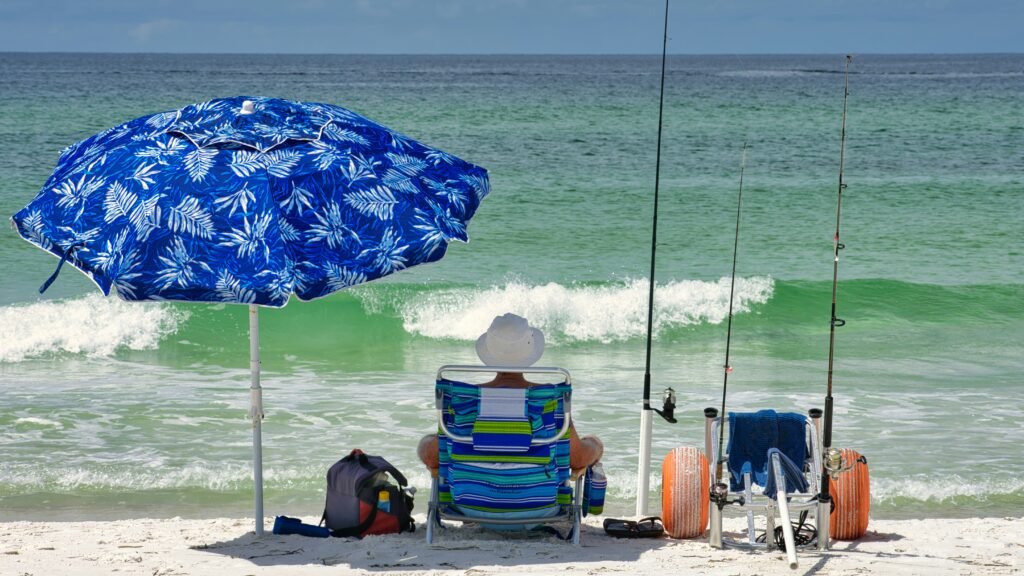
Florida shore fishing gives residents and visitors access to saltwater fishing without requiring a boat. Beaches, bridges, seawalls, jetties and public piers can all provide opportunities to catch fish, but each location presents different rules and hazards.
Before casting a line, anglers need to confirm licensing requirements, identify the water they are fishing, review current species regulations and understand the site’s local rules.
What Counts as Shore Fishing in Florida?
Shore fishing generally means fishing from land or from a structure permanently attached to land. Common locations include:
- Public beaches
- Fishing piers
- Bridges where fishing is permitted
- Seawalls
- Jetties
- Docks fixed to the shoreline
- Canal banks
- Riverbanks and lake shores
A shoreline fishing license does not necessarily cover fishing from a boat, kayak or shoreline reached by boat. The legal requirements depend on the angler’s residency, location, fishing method and whether the water is fresh or saltwater.
Determine Whether the Water Is Fresh or Saltwater
Florida has freshwater lakes, rivers and canals as well as saltwater beaches, bays and estuaries. Some coastal waterways contain brackish water, where fresh and salt water mix.
The type of license generally follows the species an angler is targeting rather than the water’s appearance alone. Someone fishing in brackish water may encounter both freshwater and saltwater species.
If you are unsure which license applies, check the location and intended catch with the Florida Fish and Wildlife Conservation Commission before fishing. Carrying both freshwater and saltwater privileges may be necessary in some circumstances.
Florida Shore Fishing License Requirements
Most Florida residents and visitors need an appropriate recreational fishing license unless a specific exemption applies.
Florida residents can obtain a no-cost annual saltwater shoreline fishing license. It applies when fishing from shore or from a structure fixed to shore, but it does not cover fishing from a vessel or a shoreline reached by vessel. Convenience or handling fees may apply depending on how the license is obtained.
Nonresidents do not qualify for Florida’s resident shoreline license. They generally need an appropriate nonresident saltwater fishing license even when fishing from a beach or pier.
Some piers hold licenses that cover paying customers, but anglers should never assume this is the case. Confirm the pier’s licensing arrangement before fishing.
The FWC’s saltwater shoreline fishing information explains who qualifies and what activities the license covers. Anglers can also review the agency’s broader guidance on recreational license requirements and exemptions.
A Free License Is Still a Required License
The no-cost resident shoreline license is not an automatic exemption for every Florida resident. An eligible angler may still need to obtain the license and carry proof while fishing.
Separate permits may also apply to particular species or activities. Age, disability, military status and participation in designated fishing days can affect licensing requirements, but anglers should verify that an exemption applies rather than relying on an informal explanation.
Keep proof of your license or exemption accessible. A screenshot or downloaded copy can be helpful in places with poor cellular reception.
Regulations Change by Species and Location
A fishing license provides permission to fish; it does not allow an angler to keep every fish caught.
Florida regulations may establish:
- Minimum or maximum lengths
- Slot limits
- Daily bag limits
- Closed seasons
- Gear restrictions
- Regional management boundaries
- Special permits
- Prohibited species
Rules can differ between the Atlantic and Gulf coasts or between management regions. Special regulations may also apply in national parks, state parks, wildlife refuges and other protected areas.
Review the current FWC saltwater recreational fishing regulations shortly before each trip. Do not rely on a photograph of a regulation chart from a previous season.
When you cannot confidently identify a fish or confirm that it is legal to possess, release it promptly.
Learn How Fish Are Legally Measured
Fish are not all measured in the same way. Depending on the species, Florida regulations may use total length or fork length.
Total length generally measures the fish from the most forward point of its head to the farthest tip of the tail when the tail is compressed appropriately. Fork length measures from the front of the head to the center of the tail’s fork.
Carry a suitable measuring device and review the correct method for the species you may catch. Guessing by sight can result in keeping an undersized or oversized fish.
Measure the fish quickly and avoid placing it on hot, dry or abrasive surfaces when you expect to release it.
Choosing a Shore Fishing Location
A good location for a beginner should offer legal public access, sufficient casting space and a manageable distance from the water.
Public fishing piers can be practical because they may provide railings, lighting, cleaning stations or designated fishing areas. Beaches offer more space, but anglers must share them with swimmers and other visitors. Jetties may reach deeper water but can become extremely slippery and dangerous.
Before visiting, check:
- Operating hours
- Entrance or fishing fees
- Parking restrictions
- Whether fishing is permitted
- Posted closures
- Lighting and nighttime access
- Rules concerning bait, hooks and fish cleaning
- Whether a pier license covers customers
- Accessibility features
A location shown on an old fishing forum or map may now be private, closed or subject to different rules.
Fishing From a Public Beach
Beach fishing requires careful consideration of other people. Avoid casting near swimmers, surfers, children or crowded access points.
Fishing may be restricted to particular sections or hours. Local governments may prohibit fishing in guarded swimming areas or during busy daytime periods.
Before setting up, look for signs and speak with a lifeguard or park employee when the rules are unclear. Keep hooks, knives and fishing line contained so other beach users do not step on them.
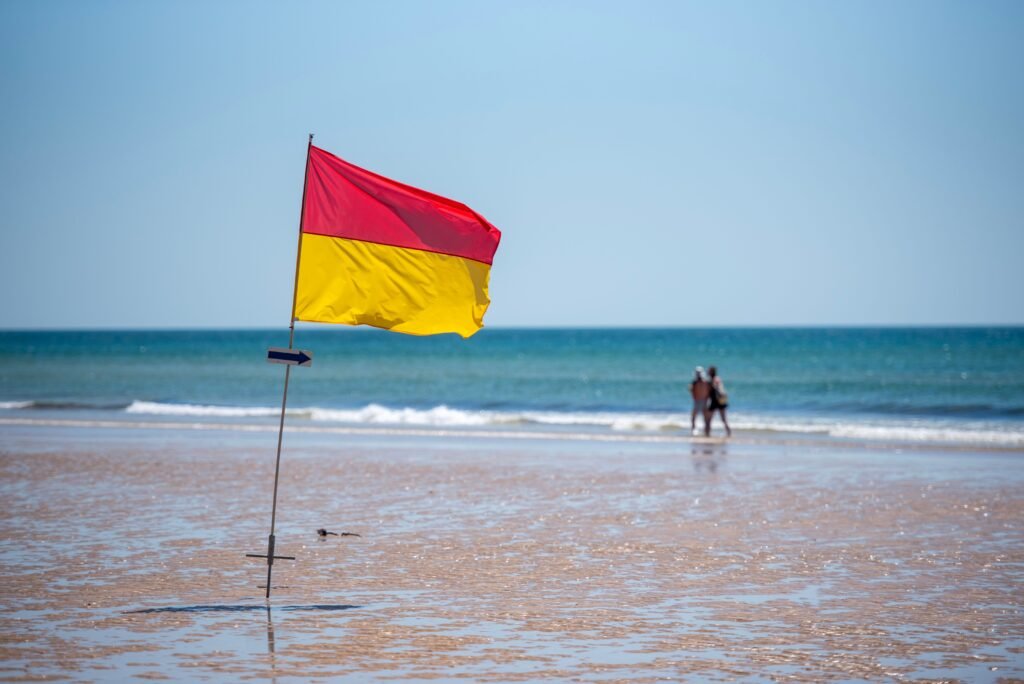
Review Florida beach flag warnings as well. Fishing may still be legally permitted when hazardous surf is present, but rough water can make the shoreline, rocks and jetties unsafe.
Fishing From Jetties and Rock Structures
Jetties can provide access to moving water and deeper channels, but they are among the more hazardous shore-fishing environments.
Rocks may be uneven, unstable or covered with algae. Waves can wash over surfaces that appeared dry moments earlier. A hooked fish can also pull an angler off balance.
Wear footwear with dependable traction and remain away from edges exposed to breaking waves. Do not climb onto closed sections or cross wet rocks simply to reach a more productive position.
If waves are reaching the area where you intend to stand, choose another location.
Lightning Requires an Immediate Change of Plans
Fishing rods, open beaches and exposed piers provide no protection during a thunderstorm. If you hear thunder, stop fishing and move to a substantial enclosed building or a hard-topped vehicle with the windows closed.
A pier shelter, beach pavilion, tree or open-sided structure is not reliable lightning protection. The National Weather Service advises that no outdoor location is safe while a thunderstorm is in the area.
Check the hourly forecast and radar before leaving home. Florida’s storm patterns can change quickly, especially during the wet season. Our guide to hiking during Florida’s wet season provides additional guidance about lightning, heat and changing outdoor conditions.
Watch the Water and Tides
Tides can change water depth, current speed and the amount of safe standing space. A route onto a sandbar or shoreline point may be exposed at low tide and submerged later.
Never turn your back on breaking waves while standing near the surf. Keep equipment far enough inland that it cannot be carried away by rising water.
Around inlets, bridges and channels, currents may be much stronger than they appear from shore. Do not enter the water to retrieve tackle or a fish when waves, current, depth or visibility make doing so unsafe.
Red Tide and Water-Quality Conditions
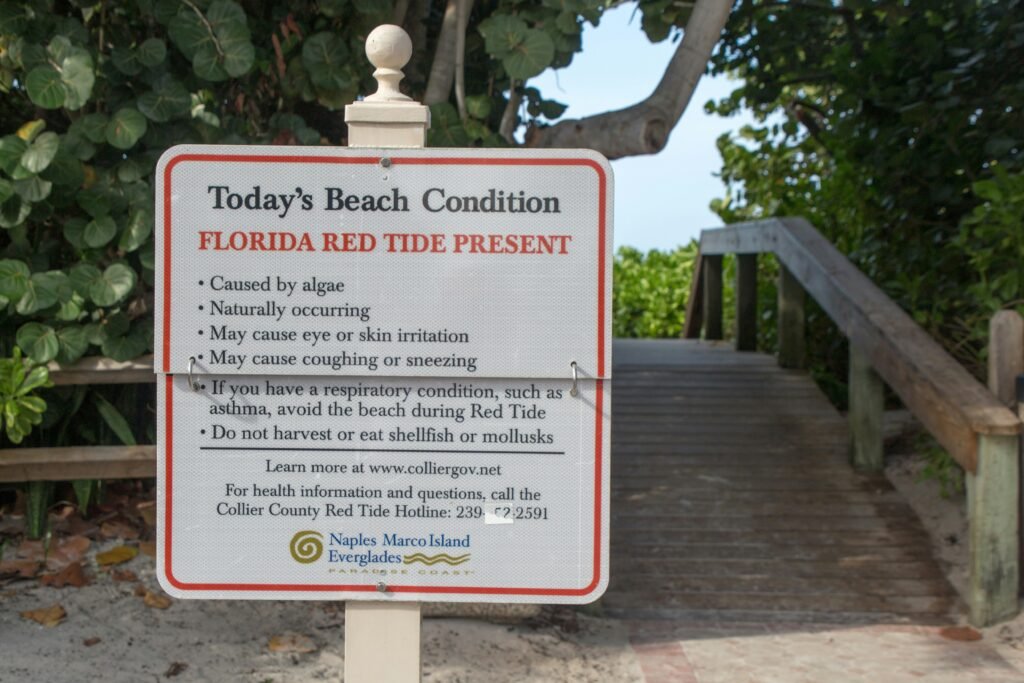
Red tide can cause respiratory irritation and fish kills along parts of Florida’s coast. Conditions may vary between nearby beaches and change with wind, tides and currents.
Check current reports before fishing in a potentially affected area. Avoid handling fish that are already dead or behaving abnormally, and do not harvest seafood from an area closed by authorities.
Our Florida red tide guide explains how to check conditions and reduce exposure.
Bacterial advisories are separate from red tide reports. Anglers should also review local health-department notices, particularly before wading or handling fish near a recently affected beach.
Basic Equipment for a First Trip
The appropriate rod, line and tackle depend on the target species and location. However, every shore angler should bring equipment that supports legal measurement, safe handling and responsible cleanup.
Useful items include:
- Fishing license or proof of exemption
- Current regulations
- Measuring device
- Pliers or a dehooking tool
- Line cutters
- Drinking water
- Sun protection
- Closed-toe footwear where appropriate
- First-aid supplies
- A container for used line and damaged tackle
If you plan to keep fish, bring a suitable cooler with enough ice to preserve the catch. Never leave harvested fish exposed to heat for an extended period.
Handle Released Fish Carefully
Not every legal fish needs to be kept. When releasing a fish, minimize the time it remains out of the water.
Wet your hands before handling it, support its body and avoid touching the gills. Use a dehooking tool when possible. If a hook cannot be removed safely without causing further damage, cutting the line close to the hook may be preferable to prolonged handling.
Avoid dragging fish across dry sand or allowing them to strike a pier deck repeatedly.
The Florida State Parks fishing guide recommends reducing time out of the water, using dehooking tools and disposing of monofilament line properly.
Be Careful With Hooks and Unfamiliar Fish
Many Florida fish have sharp teeth, spines, gill plates or defensive structures. Do not place your hands near a fish’s mouth unless you know how to handle the species.
Use pliers rather than attempting to pull an embedded hook with your fingers. Keep a safe distance from stingrays, catfish spines and other unfamiliar catches.
If a person is seriously injured, control bleeding when possible and seek medical assistance. Marine puncture wounds can become infected and may require professional evaluation.
Dispose of Fishing Line Responsibly
Discarded monofilament can entangle birds, turtles, fish and other wildlife. It can also wrap around people, propellers and maintenance equipment.
Collect every piece of line, including short clippings. Use a designated monofilament recycling container where available. If one is not provided, secure the line and dispose of it properly after leaving the site.
Never leave hooks, bait containers or fish remains on a beach, pier or seawall. Follow posted instructions for fish-cleaning waste rather than throwing it into swimming areas or leaving it for wildlife.
Respect Birds and Other Wildlife
Pelicans, herons and other coastal birds may gather near anglers. Never deliberately feed them or encourage them to approach fishing equipment.
If a bird becomes entangled, do not cut the line and allow it to fly away with trailing material. Keep control of the line and contact park staff or an appropriate wildlife responder for guidance if you cannot safely free the animal.
Alligators may be present near freshwater and brackish fishing locations. Keep your distance, never feed them and keep pets away from the water’s edge.
Prepare Before Keeping a Catch
Before placing a fish in a cooler, confirm its identity, legal length, season and bag limit. Know whether the limit applies per person, per vessel or as part of a combined species group.
Record how many legal fish each angler has retained. People fishing together do not automatically receive permission to combine or exceed individual limits.
When uncertain, release the fish. Identification and regulatory questions are easier to solve before the next trip than after an enforcement officer inspects the catch.
A Responsible First Shore-Fishing Trip
For a first outing, choose a maintained public pier or spacious shoreline where fishing is clearly permitted. Visit during daylight, check the weather and review the likely species before arriving.
Bring only enough equipment to manage safely. A simple, organized setup is easier to monitor than several unattended rods surrounded by loose hooks and line.
Most importantly, approach each catch as an identification and regulation decision. Confirm what the fish is, whether it can be kept and how it must be measured before adding it to your cooler.
Note: Florida fishing licenses, seasons, bag limits and location-specific rules can change. Check current Florida Fish and Wildlife Conservation Commission regulations and posted local requirements before every fishing trip.