Florida red tide can turn an anticipated beach day into an uncomfortable experience, particularly for people with asthma or other respiratory conditions. However, its effects are often localized. One beach may experience respiratory irritation or dead fish while another beach a short distance away has few noticeable effects.
Learning how to check current conditions—and knowing when to choose another location—can help you make safer, more flexible beach plans.
What Is Florida Red Tide?
Florida red tide is a harmful algal bloom most commonly associated with Karenia brevis, a microscopic organism found in Gulf of Mexico waters. When concentrations increase, the organism can produce brevetoxins that affect fish, marine animals and people.
Despite its name, red tide does not always make the water look red. Depending on the bloom’s concentration and surrounding conditions, the water may appear brown, rust-colored, greenish or completely normal.
Possible signs of red tide include:
- Coughing or throat irritation near the shoreline
- Eye or nasal irritation
- Dead fish along the beach
- Discolored water
- Reports of elevated Karenia brevis concentrations
- Temporary shellfish-harvesting closures
The absence of discolored water or dead fish does not necessarily mean that red tide is absent.
Why Conditions Can Differ Between Nearby Beaches
Red tide conditions are influenced by currents, tides, wind and the changing location of the bloom. Concentrations can therefore vary considerably over relatively short distances.
Wind direction is especially important. When the wind blows from the water toward the beach, airborne toxins produced by wave action may reach people onshore. An offshore breeze may reduce respiratory irritation at the beach, although it does not mean the bloom has disappeared or that the water is unaffected.
Conditions may also change during the day. A beach that was comfortable in the morning could become irritating later if the wind shifts.
Check Current Conditions Before Leaving
Begin with the Florida Fish and Wildlife Conservation Commission’s statewide red tide information. Its reports and maps provide sampling information and observations from affected areas.
Because monitoring samples represent particular places and times, also check:
- Your county health department
- The local parks or beach-management department
- Official city or county social-media updates
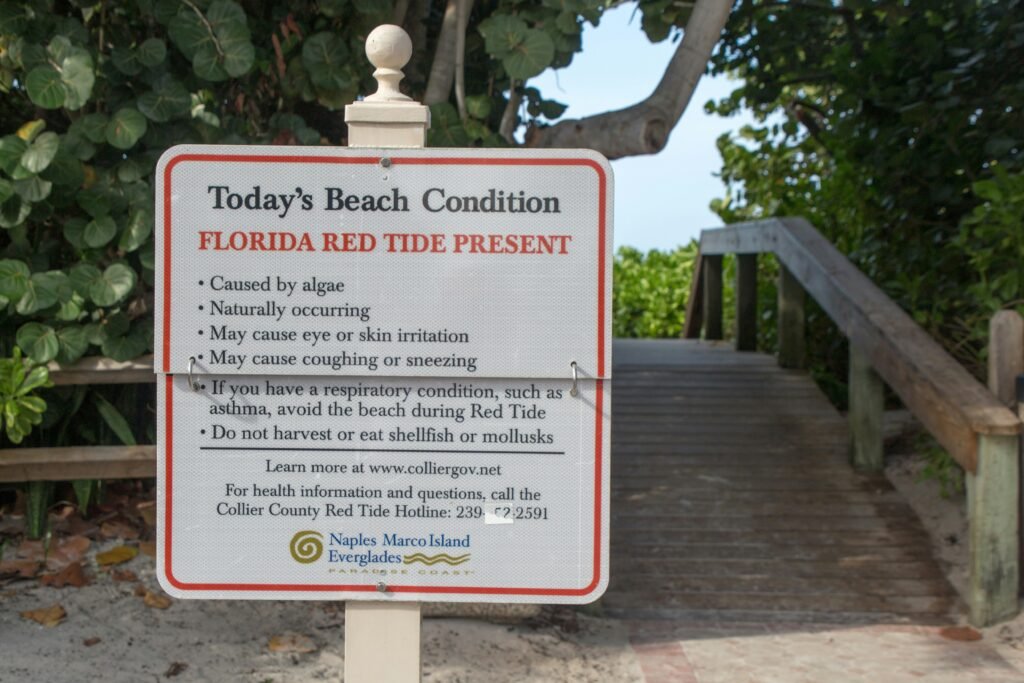
- Posted notices at the beach
- Local lifeguard information, when available
If someone in your group has asthma, chronic obstructive pulmonary disease or another respiratory condition, check conditions shortly before departure rather than relying on a report from several days earlier.
Red Tide Reports and Beach Flags Are Different
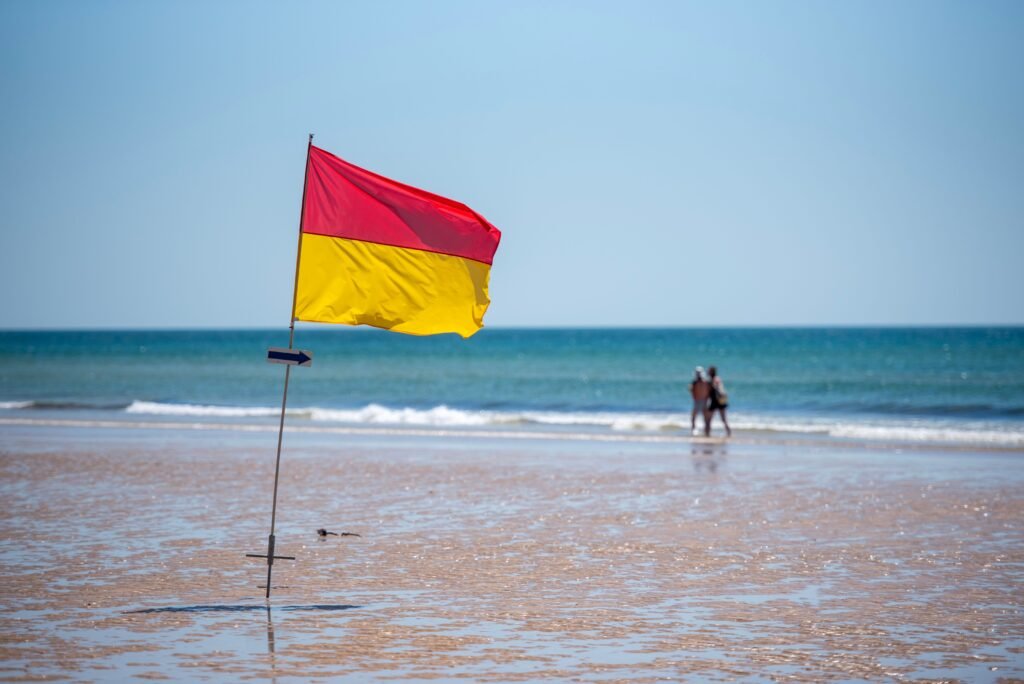
A beach flag communicates immediate hazards such as rough surf, dangerous currents or hazardous marine life. It is not a dedicated measurement of red tide concentration or airborne irritation.
Review our guide to Florida beach flag warnings before visiting the coast, but check red tide information separately. A beach can have relatively calm water while experiencing red tide effects, or dangerous surf when no red tide is present.
Always follow posted flags and lifeguard instructions.
Red Tide and Bacterial Advisories Are Not the Same
Red tide is caused by a harmful algal bloom. A bacterial swimming advisory, by contrast, generally concerns elevated levels of fecal indicator bacteria detected through water sampling.
These are separate water-quality issues, so checking one does not automatically tell you about the other. Florida’s Healthy Beaches Program provides information about coastal bacterial monitoring.
Before swimming, review both red tide conditions and any current bacterial advisories for the area.
Possible Symptoms Near an Affected Beach
Wave action can break open red tide cells and release toxins into the air. People near the shoreline may experience:
- Coughing
- Sneezing
- A scratchy or irritated throat
- Watery or burning eyes
- Nasal irritation
- Shortness of breath
Symptoms may be more significant for people with asthma, emphysema or other respiratory conditions.
If irritation begins, move away from the shoreline and enter an air-conditioned indoor space if possible. Follow your existing medical care plan and use prescribed medication as directed by your healthcare professional. Seek urgent medical assistance for severe or persistent breathing difficulty.
The FWC red tide FAQ provides additional information about health effects and Florida’s monitoring efforts.
Should You Swim During Red Tide?
Some people can swim in water affected by low red tide concentrations without noticeable symptoms, while others may experience skin or respiratory irritation. Avoid entering the water when:
- Officials advise against swimming
- You see numerous dead or distressed fish
- The water is heavily discolored
- You are already coughing or experiencing eye irritation
- You have an open wound or irritated skin
- A respiratory condition makes exposure especially risky
If irritation develops while swimming, leave the water and rinse your skin with fresh water. Change out of the wet swimsuit rather than remaining in it for the rest of the day.
Never handle dead fish with bare hands. Children should also be kept away from fish, foam and other material accumulating along the shoreline.
Protecting Pets During a Red Tide Event
Dogs can be exposed by swimming, drinking seawater, licking contaminated fur or investigating dead marine animals.
During a reported bloom:
- Keep pets away from dead fish
- Do not allow them to drink seawater
- Avoid areas with discolored water or shoreline debris
- Rinse them thoroughly if accidental water contact occurs
- Prevent them from licking their coat until it has been rinsed
- Contact a veterinarian if unusual symptoms appear
Moving to a different beach is generally a better option than attempting to manage a pet’s exposure at an affected location.
Seafood and Recreational Harvesting
Commercial seafood sold through regulated markets is subject to monitoring and harvesting controls. Recreational harvesting requires more individual attention because shellfish closures and red tide reports can change.
Do not collect or eat dead or distressed fish found near an affected beach. Before harvesting shellfish, confirm that the area is officially open through the appropriate Florida agencies. Do not assume that cooking makes shellfish harvested from a closed or unsafe area suitable to eat.
Fish that appear healthy and are legally caught outside restricted areas may be treated differently from shellfish, but anglers should still follow current state guidance and local advisories.
How to Adjust Your Beach Plans
A red tide report does not always require canceling an entire coastal trip. Because effects are often patchy, consider:
- Checking an official map for less-affected beaches
- Choosing a beach farther from reported concentrations
- Visiting an inland park, museum or attraction
- Staying away from the immediate surf zone
- Selecting an activity away from onshore wind
- Rechecking conditions the morning of your visit
Do not simply drive to the next public access point without checking reports. Beaches only a few miles apart can have different conditions, but the neighboring location could also be affected.
What to Bring on a Potential Red Tide Day
If low concentrations have been reported nearby, a flexible beach kit can include:
- Fresh drinking water
- Sunglasses
- A clean change of clothes
- Fresh water for rinsing
- Prescribed respiratory medication
- Supplies for cleaning a pet after accidental exposure
- An alternative inland destination
Sun protection remains essential even when red tide is the primary concern. Review our guide to Florida summer heat for additional precautions during hot-weather outings.
A Practical Decision Guide
Consider proceeding with the visit when official reports show little or no activity, no local advisory is in effect and conditions at the beach feel comfortable.
Consider choosing another beach when red tide is present nearby but reports indicate that conditions are better elsewhere.
Leave or move indoors when coughing, eye irritation, breathing discomfort, extensive dead fish or strongly discolored water is present.
People with respiratory conditions, young children and pets may require a more cautious approach because their tolerance and ability to avoid exposure can differ.
Staying Flexible Is the Best Strategy
Florida red tide is dynamic. Its presence, concentration and effects can change with tides, currents and wind direction. Checking official reports before departure, evaluating the beach after arrival and keeping a backup destination in mind can prevent unnecessary exposure without automatically sacrificing the entire day.
If conditions look or feel different from the information you reviewed online, trust what is happening at the beach and relocate.
Note: Red tide conditions and associated health guidance can change quickly. Consult current information from the Florida Fish and Wildlife Conservation Commission, the Florida Department of Health and local authorities before entering the water or harvesting seafood.