Florida beach flags help visitors understand current surf hazards before entering the water. A calm-looking shoreline can still have strong currents, dangerous marine life or conditions that are difficult for swimmers to recognise.
The standard Florida system uses green, yellow, red and purple flags. Two red flags displayed together indicate that the water is closed to the public.
Flags provide a general warning about current conditions. They do not guarantee that every hazard has been identified, and conditions can change between official updates.
Florida’s Standard Beach Flag System
Florida developed a uniform beach-warning programme to reduce confusion between coastal communities. Public beaches that display warning flags are expected to use the state’s standard colours and meanings.
The Florida Department of Environmental Protection explains the official Beach Warning Flag Program and provides interpretive signs for participating communities.
The standard meanings are:
| Flag | Meaning |
| Green | Low hazard and relatively calm conditions |
| Yellow | Medium hazard with moderate surf or currents |
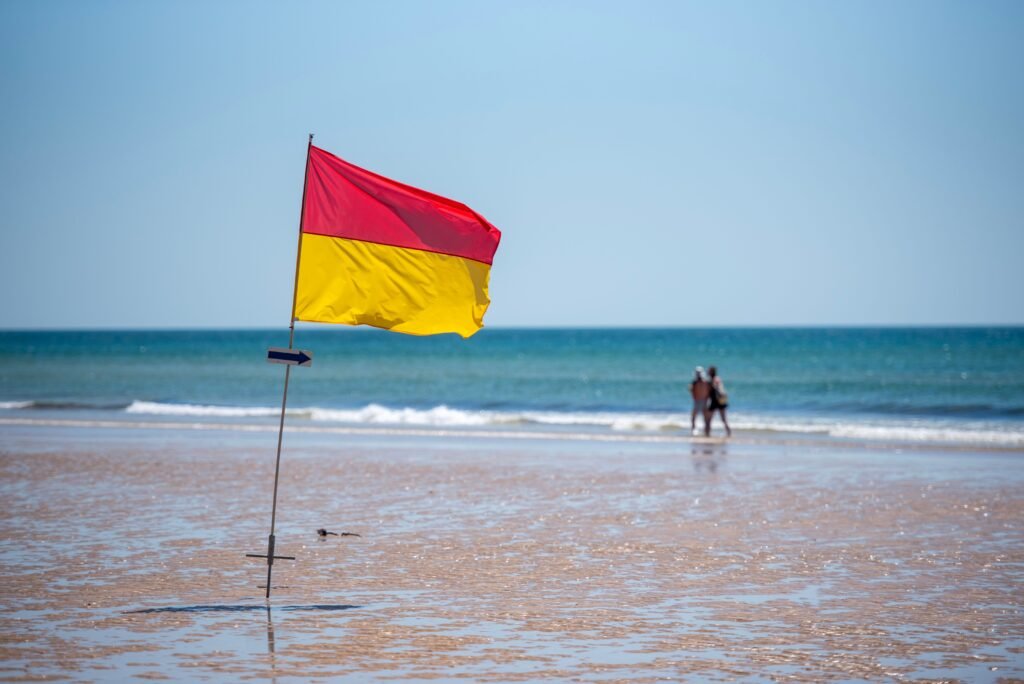
| One red flag | High hazard with strong surf or currents |
| Two red flags | Water closed to the public |
| Purple | Dangerous marine life present |
A purple flag may be displayed with another colour. For example, a purple flag with a yellow flag can mean that dangerous marine life is present while surf conditions also require caution.
Always read the posted sign because individual beaches may display additional information.
Green Flag: Low Hazard
A green flag means that surf and current hazards are considered relatively low.
It does not mean the water is completely safe. Rip currents, sudden waves, drop-offs, underwater objects and changing weather can still create risks.
Children, weak swimmers and people unfamiliar with ocean conditions need supervision under a green flag. Swim near a lifeguard and remain within your abilities.
Low-risk conditions can become more dangerous as tides, wind and storms change. Look at the flag again if you leave the beach and return later.
Yellow Flag: Medium Hazard
A yellow flag indicates moderate surf, currents or other water conditions requiring increased caution.
Weak swimmers and young children may need to remain out of deeper water. Even capable swimmers should stay near lifeguards and avoid moving far from shore.
Waves can knock people down in shallow water. Repeated wave action can also make returning to shore tiring.
Do not assume that inflatable toys, inner tubes or bodyboards provide reliable protection. Wind and currents can carry them away from shore.
If a lifeguard recommends remaining in a particular area or out of the water, follow that direction even if other people continue swimming.
One Red Flag: High Hazard
A single red flag warns of strong surf, strong currents or another significant water hazard.
Entering the water under a red flag can be dangerous even for experienced swimmers. Strong waves may cause injuries near shore, while powerful currents can quickly move a swimmer away from the intended area.
Beachgoers should seriously consider remaining out of the water. Follow all lifeguard instructions and local restrictions.
A red flag does not necessarily mean the beach itself is closed. Walking on the sand may still be permitted, but water activity is hazardous.
Conditions vary between beaches. Do not drive to a nearby access point and assume that the hazard disappears because fewer people are present there.
Two Red Flags: Water Closed
Two red flags mean the water is closed to the public.
Do not enter for swimming, wading, surfing or other recreational activity. The closure may result from severe surf, dangerous currents, storms or another condition creating an unacceptable risk.
A double-red closure is not merely a recommendation for inexperienced swimmers. Local authorities may enforce the restriction and issue penalties.
Remain out until officials remove or change the warning. A visible improvement in weather or waves does not cancel the closure.
The sand or parking area may also be restricted during severe weather, storm damage or an emergency. Follow posted signs and official instructions.
Purple Flag: Dangerous Marine Life
A purple flag indicates the presence of dangerous marine life.
The warning can involve jellyfish, stingrays, sea lice or other organisms posing a current concern. It does not necessarily mean that sharks have been sighted.
Ask the lifeguard which marine hazard prompted the flag. The appropriate precaution depends on the species and local conditions.
A purple flag may accompany a green, yellow or red flag because it describes marine life rather than the overall strength of the surf.
Do not touch stranded or dead marine animals. Some organisms can still sting after washing ashore.
A Purple Flag Is Not a Water-Quality Warning
Beach flags and water-quality advisories communicate different risks.
The purple flag warns about dangerous marine life. Bacterial contamination, sewage releases, harmful algal blooms and other water-quality concerns may be communicated through separate signs, online advisories or beach closures.
The Florida Department of Health publishes Healthy Beaches water-quality information by county.
Check both beach conditions and water-quality information before visiting. The absence of a purple flag does not confirm that water-quality testing is acceptable.
Flags Do Not Specifically Confirm Rip Currents
Florida’s warning flags describe general surf conditions. The Florida Department of Environmental Protection states that they do not specifically announce whether a rip current is present.
Rip currents are narrow channels of water moving away from shore. They can occur when the overall beach flag indicates low, moderate or high hazard.
The National Weather Service publishes a Florida rip-current risk map and local surf-zone forecasts. Risk levels are generally described as low, moderate or high.
A low forecast does not mean rip currents are impossible. They may form near piers, jetties, sandbars and breaks in the waves.
How to Recognise a Possible Rip Current
A rip current may appear as:
- A gap in the line of breaking waves
- A channel of choppy or discoloured water
- Foam or debris moving away from shore
- A section of water that looks unusually calm
- Water moving seaward between breaking waves
These signs can be difficult to recognise, particularly for someone standing at water level. A seemingly calm gap may be the location where water is flowing outward.
Ask a lifeguard where rip currents are forming and which area is safest for swimming.
What to Do if Caught in a Rip Current
Remain as calm as possible and avoid exhausting yourself by fighting directly against the current.
Call and wave for help. Move parallel to the shoreline or at an angle away from the strongest flow when able, then return toward shore after leaving the current.
If you cannot escape, conserve energy by floating or treading water while signalling for assistance.
The National Weather Service advises bystanders not to enter the current to perform an untrained rescue. Alert a lifeguard, call emergency services and throw the person a flotation device when one is available.
Multiple drowning incidents can occur when family members enter the water to help without appropriate equipment or training.
Ask the Lifeguard About Current Conditions
The flag summarises general conditions, but a lifeguard may provide more specific information about the beach.
Ask:
- Where currents are strongest
- Whether marine life has been reported
- Which swimming area is recommended
- Whether the tide is changing
- Whether storms are approaching
- Whether children should remain in shallow water
- Where rescue equipment and emergency help are located
Choose a location near an operating lifeguard station whenever possible.
An unstaffed beach may still display a flag, but no one may be present to answer questions or perform an immediate rescue.
Conditions Can Change During the Day
Wind, tides, offshore storms and passing weather systems can change surf conditions quickly.
A green flag displayed in the morning may be replaced later. Check the flag each time before returning to the water.
Do not rely on a photograph, social media post or beach report from several hours earlier. Use current local information and observe official signs at the access point.
Thunder and lightning require immediate attention regardless of flag colour. A green surf flag does not mean it is safe to remain exposed during a thunderstorm.
Beach Flags Do Not Cover Every Hazard
The standard system focuses on surf conditions and dangerous marine life. It may not communicate every potential risk involving:
- Extreme heat
- Lightning
- Poor air quality
- Red tide
- Bacterial advisories
- Beach erosion
- Closed access points
- Wildlife nesting areas
- Missing lifeguard coverage
- Local boating activity
Read all signs at the beach entrance, not only the coloured flag.
The guide to Florida summer heat explains how to plan outdoor activity around heat, hydration and afternoon thunderstorms.
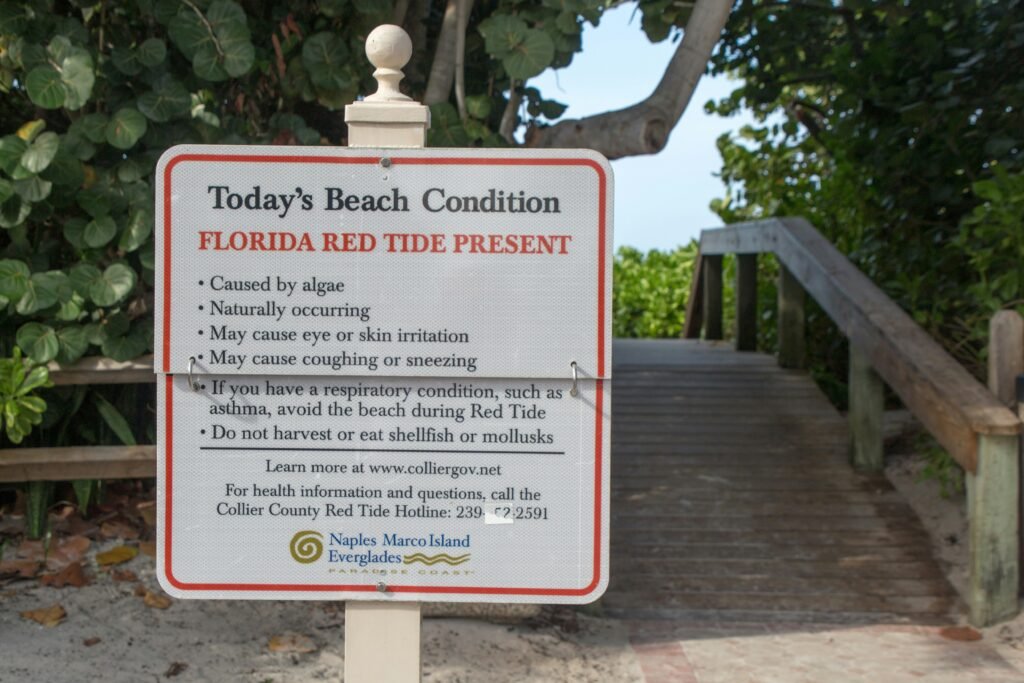
Check Red Tide Separately
Red tide can cause fish kills and respiratory irritation when toxins become airborne near affected coastal areas.
A purple flag could be used when harmful marine organisms are creating a hazard, but beachgoers should not rely solely on that flag to determine whether red tide is present.
Review official current reports and local health information. People with asthma or other respiratory conditions may need to avoid affected areas even when they do not plan to swim.
Conditions can differ considerably between nearby beaches because wind and water movement affect where impacts are strongest.
Supervise Children Closely
An adult should provide active, uninterrupted supervision when children are near the ocean.
Standing nearby while looking at a phone is not enough. Waves can knock down a child and move them rapidly.
Choose a designated swimming area near a lifeguard. Establish clear limits for how far children may enter and do not rely on inflatable toys as lifesaving equipment.
A child who is comfortable in a pool may not be prepared for waves, uneven sand, salt water and currents.
Weak Swimmers Need Extra Caution
Ocean swimming differs from swimming in calm water. Waves and currents require additional strength and judgement.
People who cannot swim confidently should remain in shallow areas permitted by current warnings and use an appropriately fitted life jacket when suitable.
Do not use alcohol before swimming. It can affect judgement, coordination and the ability to respond to changing conditions.
Swim with another person and keep track of each other. Fatigue can develop before a swimmer recognises that returning to shore has become difficult.
Understand Local Variations
Florida’s system is standardised, but not every beach displays flags. Some communities also use signs, digital reports, sirens or additional warnings.
Flag location can vary. Look near lifeguard towers, entrances, boardwalks and public access points.
A missing flag does not mean conditions are safe. It may mean the beach does not participate, the flag has not been updated or no staff are present.
Follow the instructions of local authorities when they differ from general information. They are responding to conditions at that specific beach.
Check Before Leaving Home
Before travelling to the beach, review:
- The local surf-zone forecast
- Rip-current risk
- Beach flag status
- Water-quality advisories
- Red tide reports
- Weather and lightning forecasts
- Lifeguard operating hours
- Access and closure notices
Check again when you arrive. Online conditions may have changed during the journey.
If the water is closed or dangerous, have an alternative plan that does not involve entering at an unguarded access point.
Florida beach flags provide a quick description of current hazards, but safe decisions require more than recognising colours. Beachgoers should combine the flag, lifeguard instructions, weather information and their own swimming ability before entering the ocean.
Note: Beach conditions and local warning procedures can change rapidly. Always follow posted signs, lifeguard directions and closure orders at the specific Florida beach you are visiting.