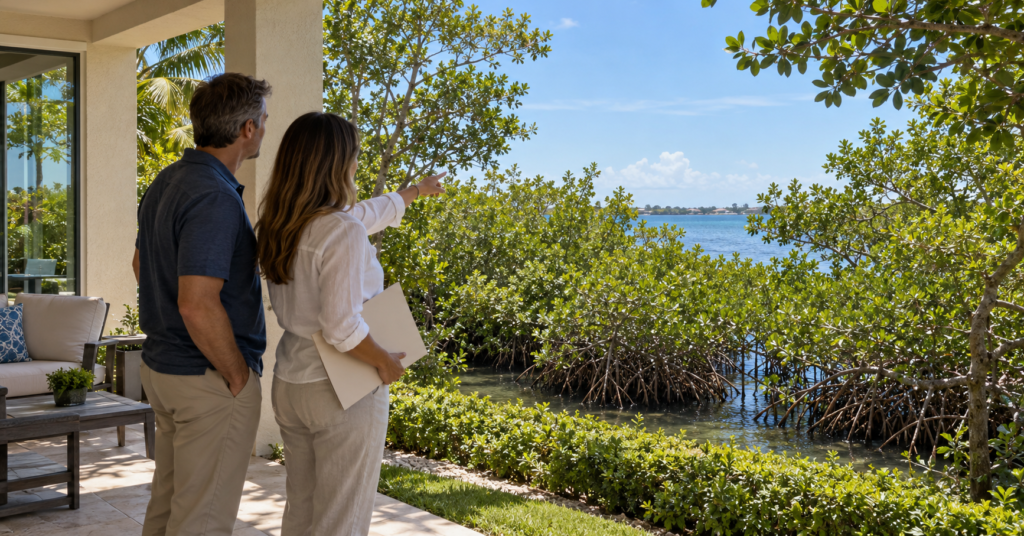
Florida waterfront homes can look very different from the shoreline than they do in listing photographs. A drone may capture open water above a band of mangroves while the view from the living room is mostly foliage. Before paying for the expectation of a clearer outlook, establish what can legally be maintained or changed.
Mangroves provide shoreline habitat, help stabilize coastal areas, and support water quality. Florida regulates their trimming and alteration. Owning a waterfront house does not give the buyer unrestricted permission to reduce the trees between the home and the water.
Inspect the view from the places you will use
Begin inside the house. Look toward the water from the sofa, dining table, kitchen, and bedrooms. Then check the patio or balcony at its normal seated height.
Ask when the listing photographs were taken and whether trimming occurred shortly beforehand. A photograph may accurately show the property on one date without explaining what maintenance is needed to preserve that appearance.
Distinguish the existing view from a proposed improvement. If the seller suggests that you can “open everything up,” ask for the documents supporting that statement. Evaluate the purchase against the view you can verify rather than an informal promise about future cutting.
Confirm which plants are mangroves
Have the shoreline vegetation identified before discussing trimming options. A mixed landscape may contain mangroves alongside other trees and shrubs, and the same rules will not necessarily apply to every plant.
Florida’s Department of Environmental Protection identifies red, black, and white mangroves as the species covered by the state’s mangrove protection framework. Its mangrove information page provides an official starting point.
Do not ask a general landscaping crew to clear unfamiliar shoreline vegetation before its status is understood. For a purchase decision, a professional assessment can help identify what is present and which questions need a regulator’s answer.
Establish who controls the shoreline
The house lot may not include every strip of land visible between the garden and the water. Review the survey, legal description, title documents, and any association records with the professionals handling your purchase.
Ask whether the mangroves stand on the seller’s property, association land, a conservation parcel, or another owner’s land. Florida DEP’s homeowner guidance explains that shoreline ownership can affect whether someone qualifies as a riparian property owner for trimming purposes.
For a condominium or community with shared waterfront, identify who authorizes and manages vegetation work. A unit owner’s preferred view does not establish control over a common shoreline. Request the current maintenance arrangements before budgeting for changes.
Separate an exemption from unrestricted trimming
Some mangrove trimming can qualify for an exemption from permitting, but the conditions matter. Tree height, the extent of the mangrove fringe, previous lawful trimming, and other site characteristics can affect the applicable route.
Florida DEP’s mangrove frequently asked questions explains a homeowner exemption involving qualifying riparian mangrove fringes and trees no taller than 10 feet. Its conditions include not trimming below six feet or defoliating the trees. Taller trees may require a professional mangrove trimmer even where an exemption remains available.
Treat those figures as a reason to investigate the site, rather than instructions to begin cutting. Ask the relevant authority which exemption or permit, if any, applies to the actual proposed work.
Request evidence of previous legal trimming
A neatly maintained mangrove hedge may have an established trimming history. Ask the seller for permits, exemption correspondence, approved plans, dated photographs, and records identifying the professional who carried out the work.
The important question is whether the present height and configuration can lawfully be maintained. An invoice establishes that work was purchased; it may not establish that the work was authorized.
Be particularly cautious about claims that a low hedge is “grandfathered.” DEP’s homeowner guide discusses the documentation needed to support certain historical trimming configurations. Without adequate evidence, a buyer should not assume that unusually low mangroves can remain that way.
Have the authority review the relevant records before assigning value to a claimed exception.
Review conservation and mitigation restrictions
Ask whether the shoreline is subject to a conservation easement, preservation designation, mitigation requirement, or recorded management plan. These documents may affect what work is permitted.
Florida DEP notes that ordinary riparian mangrove fringe exemptions cannot simply be assumed to apply within certain conservation and mitigation areas. Review the documents governing the particular land.
Request copies through the seller and closing team. If a document refers to a separate plan or approval, obtain that material too. A general description such as “protected waterfront” leaves too much uncertainty when the view is central to the purchase.
Keep trimming and removal as separate questions
Reducing foliage, cutting roots, and removing trees are different activities. A permission or exemption for one should not be read as permission for all three.
DEP explains that the usual mangrove trimming exemptions and general permits do not provide for removal merely to create water access. Certain dock or seawall situations have separate provisions, but the agency advises contacting the relevant office with photographs and a description before proceeding.
If your plans include a kayak launch, dock changes, or shoreline repairs, describe each element when seeking guidance. Do not assume a project becomes permissible because its purpose is practical rather than cosmetic.
Understand the maintenance plan before closing
Ask a suitably qualified professional to explain what lawful maintenance would involve. Request a written scope identifying the vegetation, proposed work, access arrangements, and any approvals that must be confirmed.
Find out whether the desired result would require stages rather than one visit. Also ask how ongoing growth could affect the view between maintenance visits. These answers help you estimate both expense and the appearance you can realistically expect.
For a shared shoreline, review who pays and how work is scheduled. An association’s maintenance plan may differ from the routine you would choose for an individually owned property.
Make the purchase decision using verified conditions
Keep the survey, shoreline documents, trimming history, regulatory correspondence, and maintenance estimate together. Ask your closing professional to help resolve missing records or unclear representations while the transaction is still under review.
Florida waterfront homes offer more than an open-water outlook. Mangroves can provide privacy, habitat, and a distinctive coastal setting. The buying decision should reflect the shoreline you will actually own or share and the view that can lawfully be maintained.
Note: This article provides general information. Mangrove trimming permissions depend on site conditions, ownership, historical records, and applicable state or delegated local requirements. Confirm the proposed work with the relevant authority before purchasing in reliance on a changed view or authorizing trimming.