Florida wildlife management areas offer opportunities to watch birds, photograph landscapes, walk trails, and explore habitats beyond familiar parks. However, visiting one requires attention to the rules for that particular area. An entrance shown on a map may have restricted access, and permission to walk a trail does not necessarily include permission to camp or drive nearby roads.
Before travelling, identify the exact management area, your intended activity, and the date of your visit. Those details determine which access information you need.
Find the information for the specific area
Start with the Florida Fish and Wildlife Conservation Commission’s Discover Wild Lands directory. Use the area’s name or location to find its recreation information, then review the visitor guidance and regulations brochure.
Confirm the boundaries of your destination. Nearby public lands may have similar names while being managed under different rules. A route might also cross between a wildlife management area, a state forest, and another property.
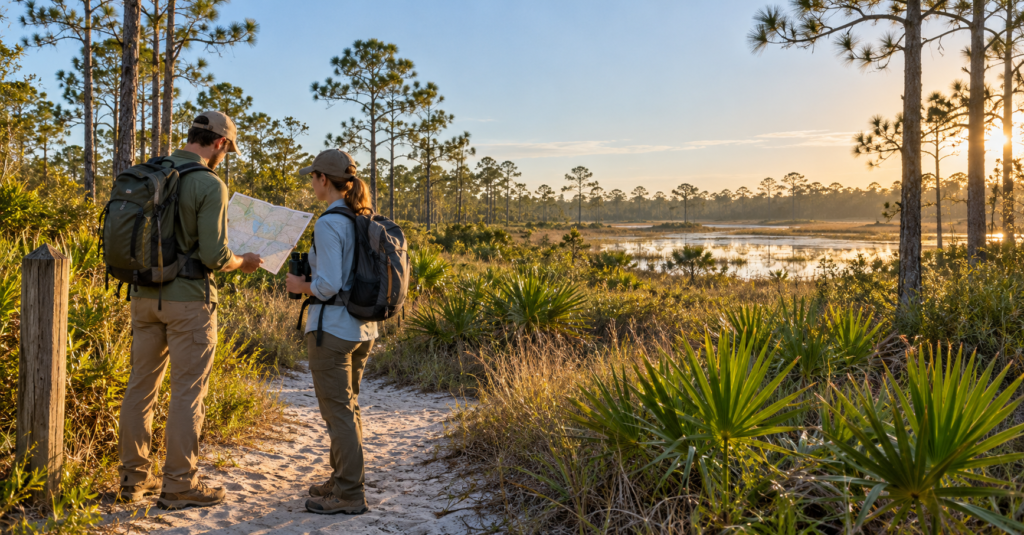
Save the relevant map and brochure before leaving home. A general trail description can help you choose an outing, but the land manager’s information should guide decisions about permitted activities and entry points.
Check whether recreational entry requires a permit
Do not assume that a permit is needed only for hunting. FWC explains that most wildlife management areas do not require a management area permit or daily-use permit for other recreation, but it identifies exceptions. Cooperating landowners and lead agencies may also have additional requirements.
Review the public land-use permit guidance alongside the information for your destination. Check whether the requirement applies to your activity, entry location, and planned date.
If you already hold a recreational licence or pass, confirm whether it satisfies the entry requirement. A pass issued for another public-land system should not be assumed to cover an FWC-managed area.
Understand how to pay and display proof
Where a daily-use fee applies, find out how payment works before arriving. FWC’s fee information page describes entrance fee stations and instructions for displaying or carrying the resulting hang-tag. It also lists exemptions and directs visitors to area-specific rules.
Check the current amount and bring an appropriate payment method. An unattended entrance may offer fewer options than a staffed park office.
Keep proof of entry where the instructions require it. If you park and continue on foot, read whether the tag should stay with the vehicle or accompany you. Follow the directions at the entrance rather than guessing from how another area handles payment.
Review access during hunting periods
Wildlife management areas can support recreation and hunting at different times or under different conditions. A birdwatching trip that worked earlier in the year may need a different plan during a scheduled hunt.
Read the area’s current brochure for access restrictions, required permits, and any dates affecting non-hunting visitors. FWC notes that access may be limited during special-opportunity hunts and that some areas require additional recreational authorisation.
Avoid relying on statewide hunting dates alone. FWC specifically states that its general season dates do not apply to wildlife management areas; the area-specific rules must be checked.
If the wording leaves you uncertain about your visit, contact the listed area office with your destination, date, and activity.
Choose a designated entrance
Plan your arrival around an entrance identified in the official visitor information. A navigation app may direct you toward the closest point on the boundary or a road that is not intended for public entry.
Compare the entrance location with the trailhead or viewing area you want to reach. Check parking arrangements, gate hours, and whether there are restrictions on vehicle access.
Do not treat an open gate as permission to drive anywhere beyond it. Likewise, a road visible on a satellite image may serve management operations rather than visitors. Stay within the routes authorised for your vehicle and activity.
Check closures shortly before leaving
Weather and land-management work can affect access after you have planned your outing. Review FWC’s closure notices and any updates on the area’s own page shortly before departure.
FWC identifies weather, drought, and flooding as circumstances that can lead to closures. Its recreation directory includes an open-or-closed status link to help visitors check conditions.
Keep a backup destination that you have also researched. If your preferred entrance is closed, do not improvise a route through another gate or neighboring property. A closure may protect visitors, habitat, or ongoing work that is not visible from the road.
Match the rules to every activity you plan
Describe your outing accurately when reviewing permissions. Walking, cycling, horseback riding, fishing, paddling, and camping can have different requirements.
For example, permission to enter for wildlife viewing does not automatically provide the licences or authorisations needed to fish. FWC states that a recreational fishing licence is required to fish on wildlife management areas unless an exemption applies.
Also check rules for dogs, group visits, and any equipment you intend to bring. If your plan involves an organised event or another activity beyond an ordinary individual visit, ask whether separate approval is required.
For an overnight trip, confirm where camping is permitted and whether advance arrangements are necessary. Access to the area during the day should not be interpreted as permission to stay overnight.
Prepare for the facilities actually available
Review the visitor page for toilets, drinking water, marked trails, accessible routes, and other facilities. Some destinations may offer a straightforward short visit, while others require more preparation.
Choose a route that fits your group’s abilities and the available daylight. Carry water, weather protection, and a downloaded map. Share your destination and expected return time with someone who is not travelling with you.
If accessibility is important, check the particular entrance and route rather than relying on a general description of the area. Ask the managing office about suitable facilities or applicable access arrangements before committing to the trip.
Make the first visit manageable
For your first outing, choose one entrance and a modest route with a clear return point. Allow time to read entrance notices, complete any payment steps, and understand how the official map relates to the ground.
Wildlife sightings are unpredictable, so build the visit around an enjoyable route rather than a promise of seeing a particular animal. Observe wildlife from a respectful distance and follow posted instructions.
Florida wildlife management areas can become rewarding places to return throughout the year. Checking access for each visit helps you choose the right date, arrive at the correct entrance, and enjoy the activities permitted there.
Note: Access conditions, permit requirements, and activity rules vary by management area and can change. Review the current official brochure, visitor information, and closure notices before travelling.